
Skip to content

Free Cold Brew ebook with your order

Free shipping on orders over €40 for Spain (Peninsula), Balearic Islands and Portugal. Shipped within 24/48h Mon-Fri

Free shipping to Europe on orders over €99

Cart

Your cart is empty

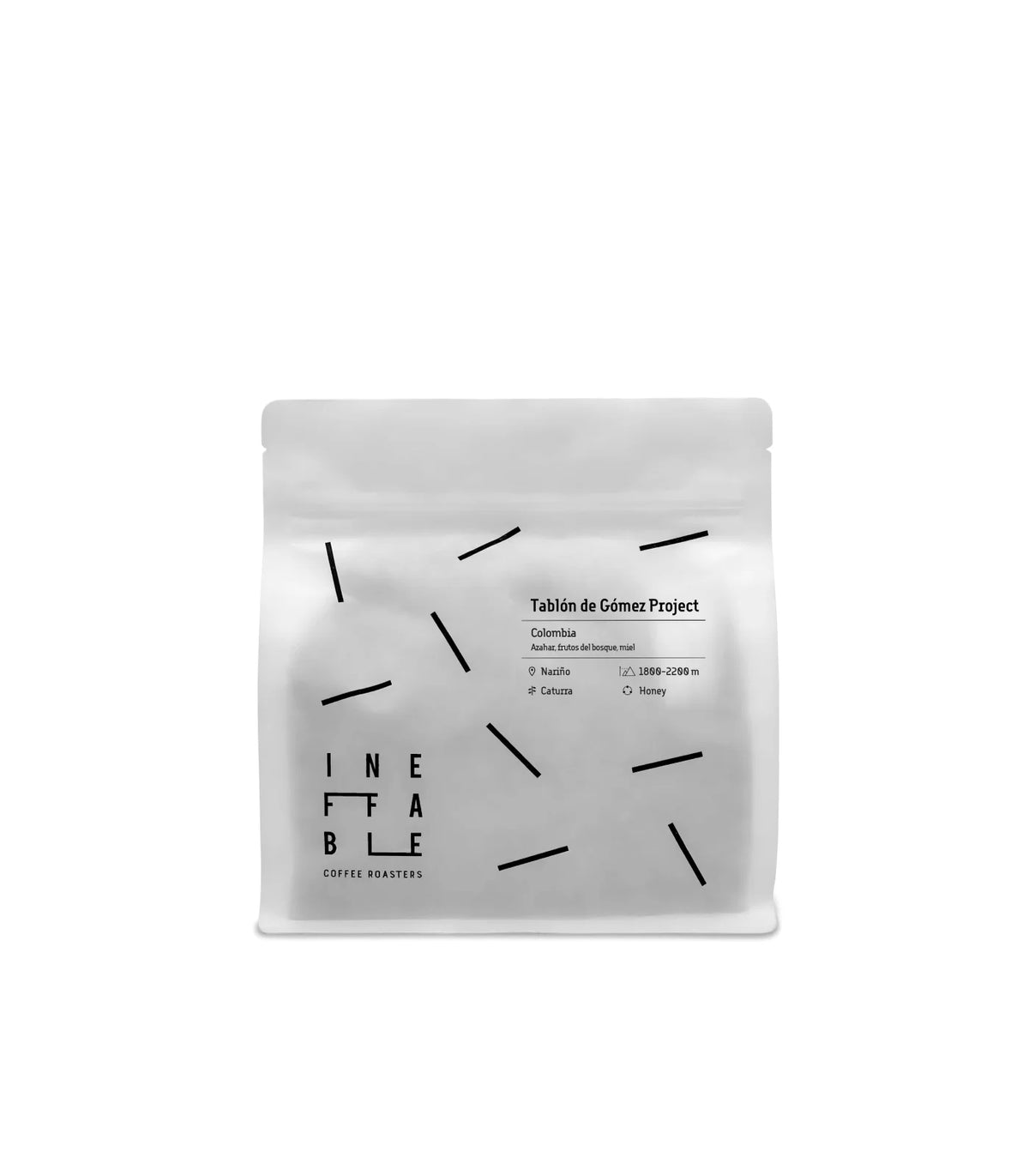
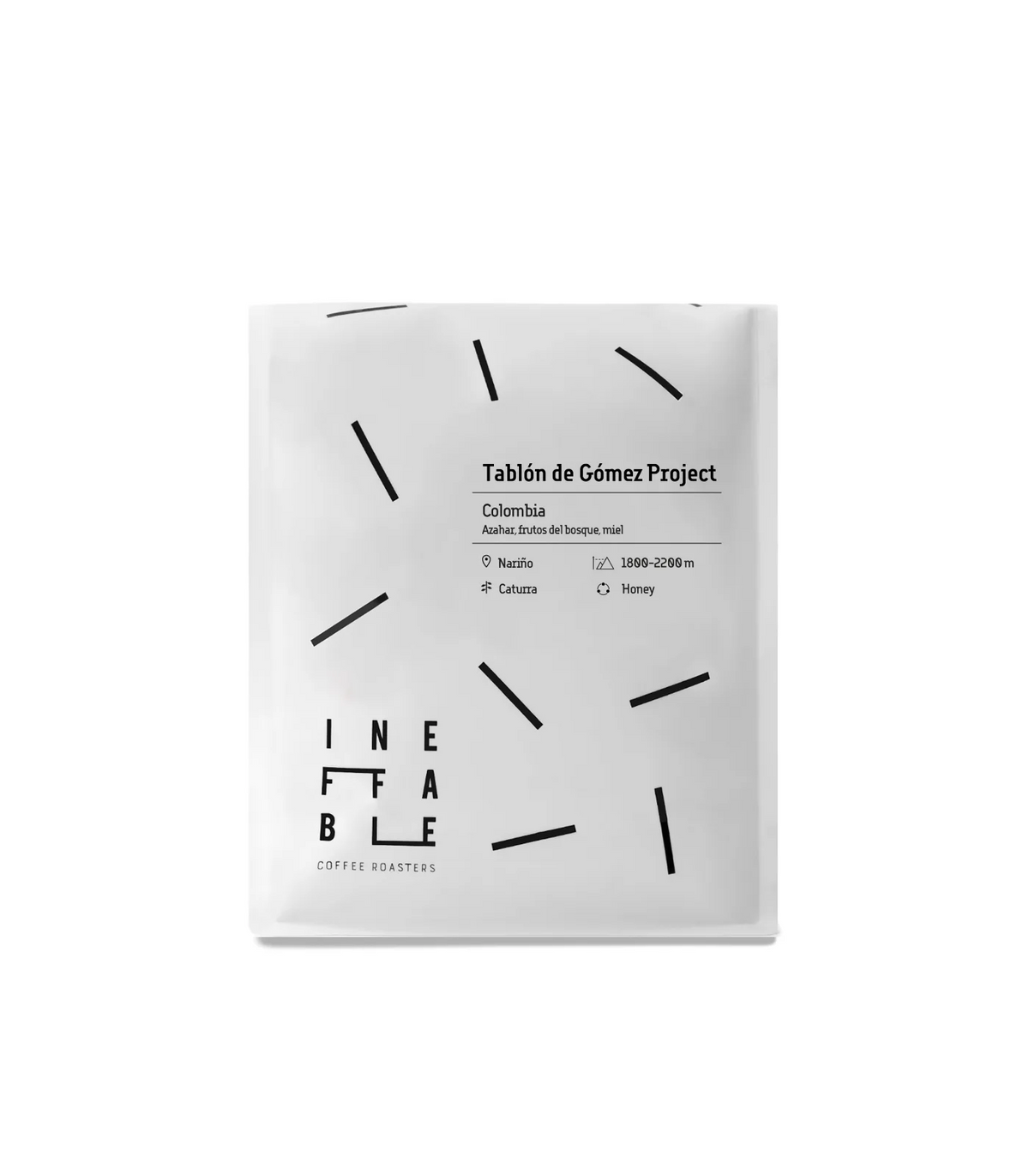
Tablón de Gómez Project

Sale price15,00€

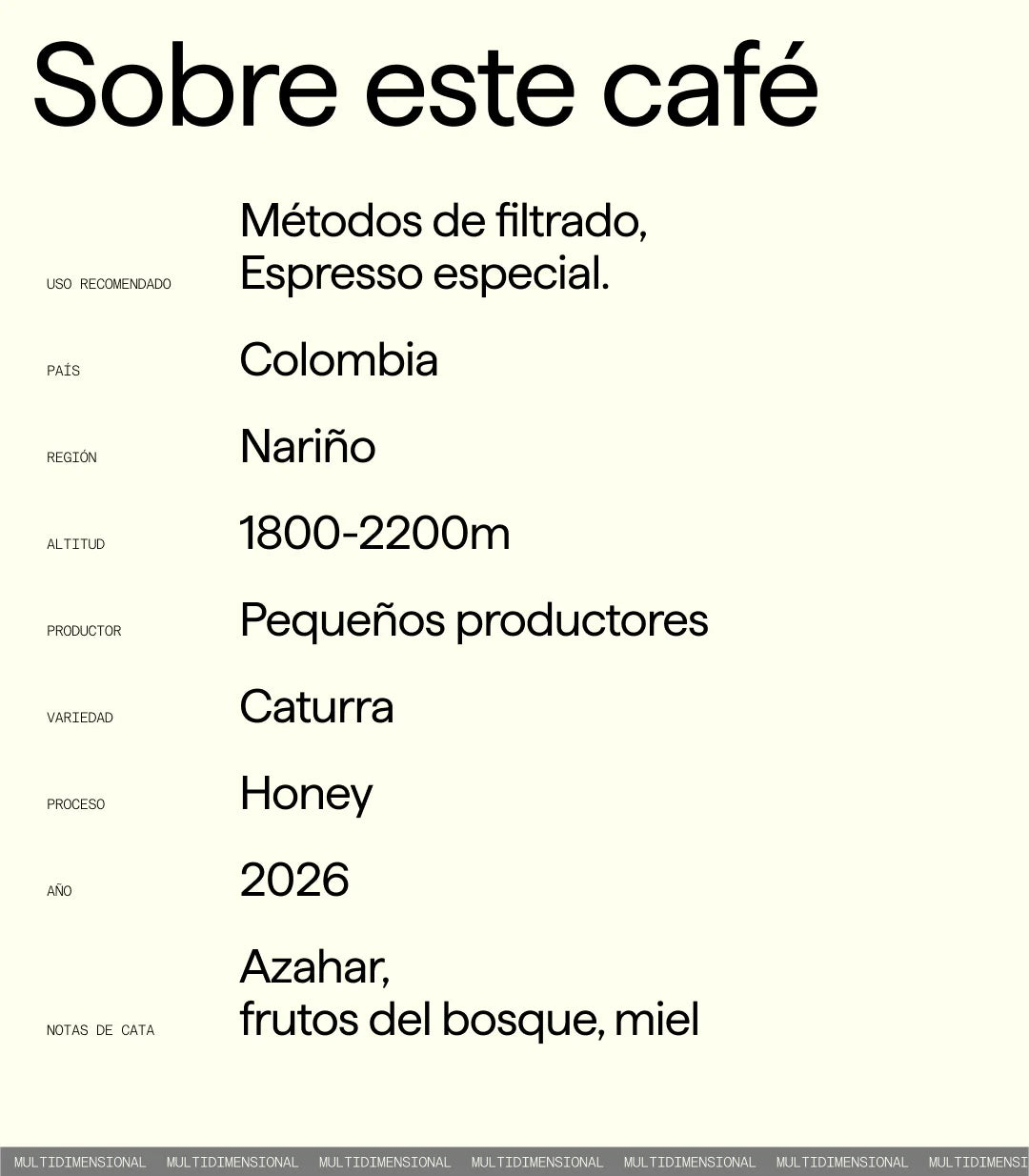
Located in the mountains of Tablón de Gómez, in Colombia’s Nariño region, this project brings together more than 40 smallholder producers who have perfected the Honey process over generations.

In the cup, it stands out for its juicy notes of forest fruits and orange blossom. A sweet base of honey with a background of white chocolate. A medium, fruity and floral finish with juicy acidity and a silky body.

Format:

Format:

Whole bean-Ground:

Whole bean-Ground:

Whole bean-Ground:

Reviews of our product

Fresh seasonal coffee

Freshly roasted in Seville

Eco-Friendly Packaging

Fair price

Caution to producers

Traceability from farm to cup

Learn more about the product

Discover this coffee in detail

Located in the mountains of Tablón de Gómez, in Colombia’s Nariño region, this project brings together more than 40 smallholder producers who have perfected the Honey process over generations.

The coffee plants grow between 1,800 and 2,200 metres above sea level, a combination of altitude and climate that encourages slow ripening and greater complexity in the cup.

After a 48-hour fermentation with mucilage, the coffee is sun-dried for an average of 18 days on patios and raised beds, before undergoing a 30-day stabilisation period in Buesaco.

Although the project includes several varieties, this lot is composed exclusively of Caturra, offering an elegant and expressive profile with prominent floral notes of orange blossom, forest fruits and a delicate honey sweetness.

Meet the producer

Tablón de Gómez Project: the expression of Honey in the mountains of Nariño

A project born in isolation

In the mountains of Tablón de Gómez, in Nariño, coffee is cultivated in a landscape that is as remote as it is special. Reaching some of these farms requires around three hours of travelling along dirt roads and uneven terrain from the nearest paved road, heading towards Buesaco. It is a demanding environment, but also one that best explains the identity of the coffees from this region: high altitudes, cooler temperatures and smallholder producers with deep ties to the land.

This is where we developed the Tablón de Gómez Project, a project that brings together more than 40 producers who have spent their lives growing coffee and who, over the years, have perfected one of the most delicate ways of expressing their work: the Honey process.

The scale of the project is important, but what is truly interesting is its collective nature. Each producer grows, processes and dries their own coffee following a set of shared guidelines. The result is a collective expression of a community of smallholder coffee farmers, built on knowledge that does not depend on a single farm, but on many hands and many harvests.

Altitude, patience and a defined cup

The coffee farms are located between 1,800 and 2,200 metres above sea level, conditions that encourage slow cherry maturation and help develop more complex and defined profiles. Although the project mainly works with Caturra, Colombia and Castillo, this lot is composed exclusively of Caturra, a variety that finds particularly favourable conditions here to show its more elegant side.

The process begins with a 48-hour fermentation with the mucilage, before the coffee enters a sun-drying phase that lasts an average of 18 days. The producers use both patios and raised beds, adapting the drying time to the conditions of each lot. Rather than following a rigid formula, the aim is to find the right pace to preserve the sweetness and clarity they seek in the cup.

Once drying is complete, the coffees travel to Buesaco, where they are blended and undergo a 30-day stabilisation period before being hulled. This period allows the different lots to become more homogeneous and gives the final profile greater consistency.

A clean expression of Honey

The result is worth appreciating precisely because of its balance. In the cup, orange blossom and forest fruits appear with a juicy intensity, accompanied by a clean sweetness reminiscent of honey. A delicate depth of white chocolate adds structure without taking attention away from the floral and fruity character.

This is a coffee that does not need to rely on extreme profiles to be interesting. Its appeal lies in how each element fits with the next: juicy acidity, a silky body and a medium, fruity and floral finish.

Tablón de Gómez Project is, ultimately, a glimpse of what can be achieved when the experience of smallholder producers, a privileged environment and a well-understood process work in the same direction. An expressive and precise Honey from Nariño, designed to be discovered cup by cup.

Recetas para este café

Filtro Tablón de Gomez

With each new coffee we roast, our team spends a week brewing it to find a recipe that highlights all of the coffee's qualities. We have many different brew methods, and we enjoy using all of them to find a brew that we love. The recipe you'll see below includes all the necessary information to reproduce it. Still, we always recommend trying and experimenting to discover what you like best: use it as a guideline and adapt it to your liking.

Remember: the journey is what matters, not the destination!

Please note: Water is the most important factor in achieving a great cup of coffee. Depending on where you live, its composition can vary drastically. Therefore, we recommend using at least filtered water; a better option is a mixture of Bezoya and Lanjarón. When adjusting the recipe, change only one variable at a time to identify how it influences the flavor.

It's common to start by adjusting the coffee-to-water ratio. Once you get a brew with a pleasant intensity and mouthfeel, you can modify other aspects of the extraction.

Most pour-over coffee recipes use a ratio between 1:15 and 1:17, with a brew time of 2:30 to 4:30 minutes as a guide.

Kalita

The Kalita is a very versatile and forgiving brewer. Its flat-bottom design and three-hole structure help create an even coffee bed and a controlled flow, making it easy to achieve consistent extractions. The Kalita 185 filters also have a large surface area and their characteristic wave shape helps maintain separation between the filter and the brewer, reducing the risk of clogging and allowing the water to flow evenly through the coffee bed.

Recipe

Recipe:

  • Ratio: 1:16
  • Coffee: 20g
  • Water: 320g
  • Water: 100% Bezoya
  • Grinder: EK43 Red speed HU
  • Grind size: 9
  • Total time: 3:30
  • Temperature: 97ºC
  • TDS: 1.37 %
  • EY: 19.8 %
  • Resting time: 12
  • Filter: Kalita 185

Equipment:

Kalita 185, Kalita filter, scale, timer, grinder, cup/decanter, and gooseneck kettle.

Method:

  1. Place the Kalita on a cup/decanter and insert the filter. Pour hot water through it to eliminate any papery taste and preheat the equipment.
  2. Grind the coffee to the recommended level.
  3. Discard the water and place the Kalita on the scale. Add the coffee, distributing it evenly and creating a small well in the centre. Tare the scale and start the timer.
  4. Pour 60g of water in circular motions, making sure all the coffee is evenly saturated. Wait 30–40 seconds for the coffee to degas. If the coffee has been recently roasted, allow more time.
  5. Slowly pour up to approximately 200g of water. Keep the water level relatively low and avoid pouring directly onto the filter walls.
  6. Continue pouring slowly until you reach 320g of total water. Try to maintain a consistent flow and avoid allowing the coffee bed to become completely exposed between pours.
  7. Give the Kalita a gentle swirl once the pouring is finished to level the coffee bed and ensure an even extraction.
  8. Let the water drain completely. We are aiming for a total time according to the recipe above. Adjust the grind size if necessary next time.

Espresso

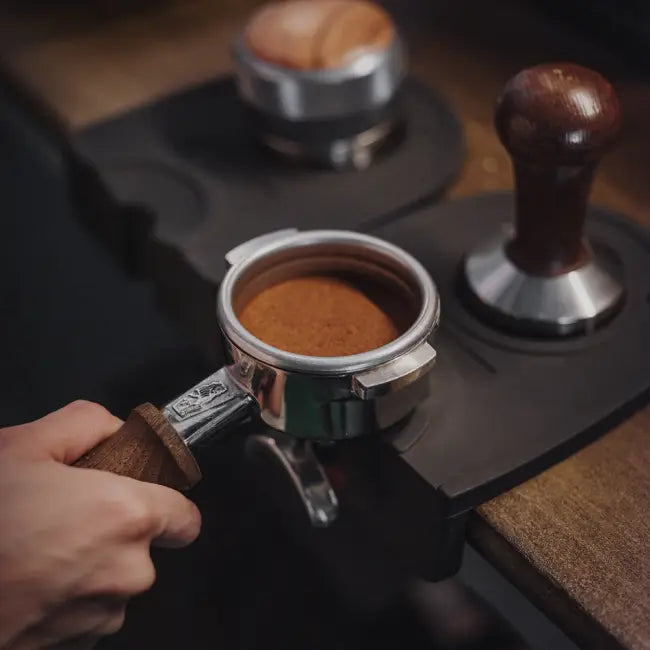
Here's our most up-to-date recipe. It's important to remember that this recipe is a reference and that many variables will influence the final result of the espresso in your cup: from the condition of your machine and grinder, the water you use, the storage/brewing time of your coffee, to the temperature/pressure, etc. Therefore, you may need to adjust some parameters to achieve a flavorful and balanced espresso based on your specific needs and equipment.

Recipe:

  • Ratio: 1:2.1
  • Dry: 18gr
  • In cup: 38gr
  • Time: 30-36s

Variables:

  • Resting time: minimum 2 weeks
  • Temperature: 94ºC
  • Pressure: 6 bars
  • Pre-infusion: No
  • GH 60 (ppm as CaCO3) KH 30 (ppm as CaCO3)

Machinery and equipment used for this recipe:

  • Espresso machine: La Marzocco PB 2GR
  • Grinder: Mahlkonig
  • Scoop: 22gr VST (without slot)
  • Extras: Barista Hustle WDT, Push Tamper (flat, 100% level)

Cold brew

[ Watch the recipe video ]

When making Cold Brew, we typically make larger quantities than with other brewing methods. So, we're providing a recipe for one liter of Cold Brew. If you want to make more or less than this amount, the ratio is 1:14; 1g of coffee for every 14g/ml of water.

Recipe and equipment:

Preparation:

  • Grind the coffee to a medium/coarse grind
  • Place the coffee directly into the filter of the pitcher or bottle
  • Pour the pre-weighed water into the pitcher or bottle
  • Stir gently to saturate all the coffee
  • Cover the container
  • Let it steep for 16-24 hours in the refrigerator (be careful with strong odors!)
  • After this steeping time, remove the filter with the coffee, and it's ready.

BONUS:

Bonus 1:You can do an additional filtration with a V60 paper filter, Kalita, cheesecloth, or something similar to get a cleaner and clearer result.

Bonus 2:For the best flavor, consume as soon as it's ready, as it will oxidize over time.

Bonus 3:Do not shake or press the coffee to avoid extracting bitter flavors or sediment.

Bonus 4:You can freeze Cold Brew into ice cubes and use them to chill your Cold Brew or for making other drinks.

Bonus 5:Food safety: wash your hands and utensils properly. Keep for a maximum of 3 days in the refrigerator in a glass container, preferably closed and without additives (sugar, milk, etc.).

Related products

FREE SHIPPING

Spain (Peninsula)

>40€ / Delivery 24/48h LV

Balearics

>40€ / Delivery 3/5 days, LV

Portugal

>40€ / Delivery 3/5 days, LV

Europe

>99€ / Delivery 4/7 days, LV

See more...