

Skip to content

Free Cold Brew ebook with your order

Free shipping on orders over €40 for Spain (Peninsula), Balearic Islands and Portugal. Shipped within 24/48h Mon-Fri

Free shipping to Europe on orders over €99

Cart

Your cart is empty

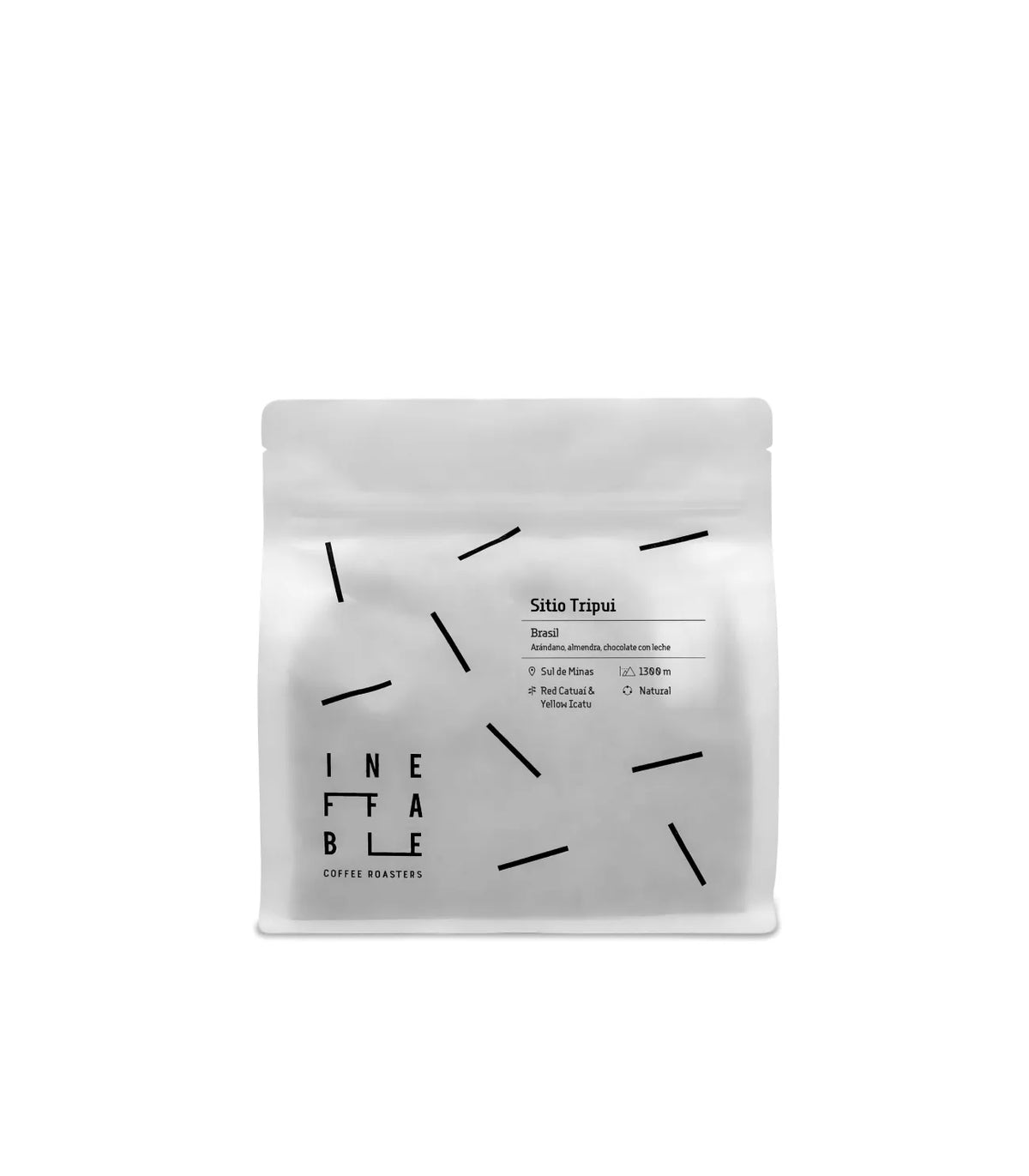
Sitio Tripui

Sale price13,00€

Sitio Tripui is a small family farm, a project by Maria and Valdecir Prado, where they live and grow coffee alongside their two daughters.

In the cup, it has a classic flavour profile. It is pleasing for its sweet notes of blueberry and almond. A milk chocolate base with a background of malt. A long finish and mild acidity.

Format:

Format:

Whole bean-Ground:

Whole bean-Ground:

Whole bean-Ground:

Cantidad

Sitio Tripui
Sitio Tripui Sale price13,00€

Reviews of our product

Fresh seasonal coffee

Freshly roasted in Seville

Eco-Friendly Packaging

Fair price

Caution to producers

Traceability from farm to cup

Learn more about the product

Discover this coffee in detail

Sitio Tripui is a small family farm, a project by Maria and Valdecir Prado, where they live and grow coffee alongside their two daughters. In Brazil, ‘Sitios’ are small plots that produce less coffee than ‘Fazendas’. 

In general, they tend to be located at higher elevations than Fazendas, on less uniform terrain. This often results in a greater focus on quality and closer attention to detail. 

The cherries are always hand-picked at the optimal stage of ripeness. They are then washed and sorted, ensuring that only fully ripe, defect-free fruit remains. 

The natural process takes place on raised beds, where the cherries are left to dry for several weeks until the beans reach the desired moisture level. 

The natural process brings distinctive sweet and fruity notes to the final cup.

Meet the producer

Sitio Tripui: the value of taking the time to do things right

A small farm in Sul de Minas

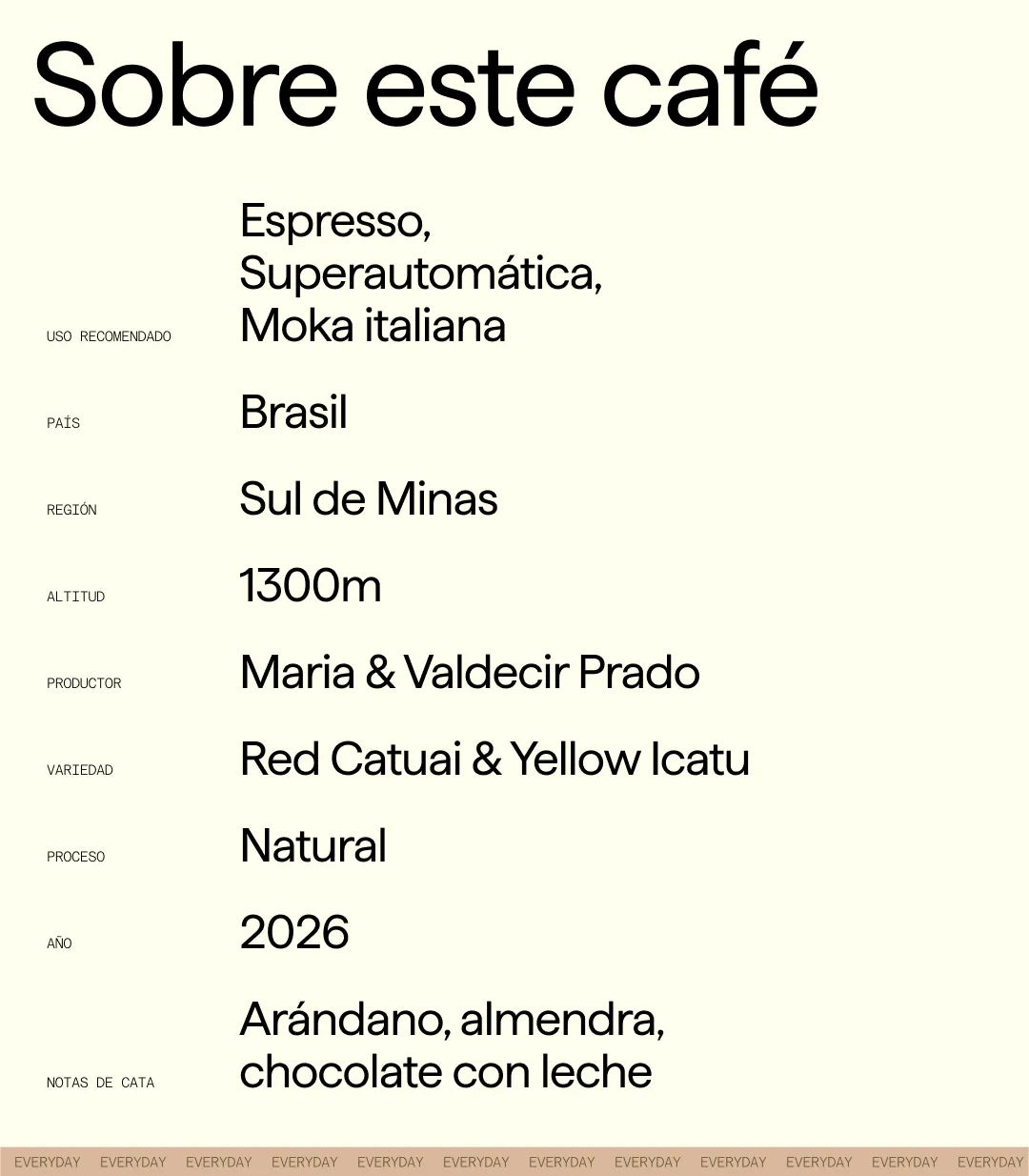
In the heart of Sul de Minas, one of Brazil’s most renowned coffee-growing regions, lies Sitio Tripui, a small family farm run by Maria and Valdecir Prado alongside their two daughters. At 1,300 metres above sea level, they grow coffee on a scale that allows something increasingly valuable: knowing the land closely, caring for each plant and paying attention to the small details that ultimately define a cup.

In Brazil, a sitio is a smaller plot of land than a fazenda. Although production is more limited, these small farms represent an important part of the country’s coffee-growing tradition. They are often found on more irregular terrain and, in many cases, at higher elevations, conditions that favour a more hands-on and careful approach to farming.

At Sitio Tripui, this family dimension is not simply a matter of scale. It is part of the coffee’s identity.

The care behind every cherry

For the 2026 harvest, Maria and Valdecir have worked with two varieties that are widely grown in Brazilian coffee farming: Red Catuai and Yellow Icatu. Both find an environment shaped by the climate and fertile soils of Sul de Minas, but it is the way they are cultivated and processed that ultimately gives the coffee its character.

The cherries are hand-picked when they reach optimal ripeness. They are then carefully sorted to remove any fruit that does not meet the desired standards. It may seem like a simple step, but with coffees like this, this is precisely where quality begins to take shape: in the decision to wait, select and pay attention to the small details.

The coffee is naturally processed and slowly dried on raised beds over several weeks. This method allows the cherries to remain in contact with the beans while gradually losing moisture, giving the coffee an especially sweet and fruity expression.

A Brazil that’s easy to enjoy

The result is a coffee with a classic profile, but far from predictable. In the cup, we find blueberry and almond, accompanied by a milk chocolate base that brings balance and a sweet, comforting sensation.

It is precisely this combination that makes Sitio Tripui an especially versatile coffee. It has enough character to be enjoyed on its own, while retaining the familiarity needed to work exceptionally well day to day. In espresso, it offers a round and sweet cup; in a super-automatic coffee machine, it maintains an accessible and expressive profile; and in an Italian moka pot, it provides a natural setting for developing its chocolate and fruit notes.

Some coffees seek to grab your attention from the first sip. This one proposes something different: staying with you. A balanced, sweet and easy-to-enjoy cup, where the work of a family and the character of a region come together without the need for artifice.

In this sense, Sitio Tripui is a small example of what can happen when coffee is grown with time, knowledge and care. A coffee from a small farm, produced on a human scale, reminding us that behind every cup there is always a place, a family and many decisions made with care.

Recetas para este café

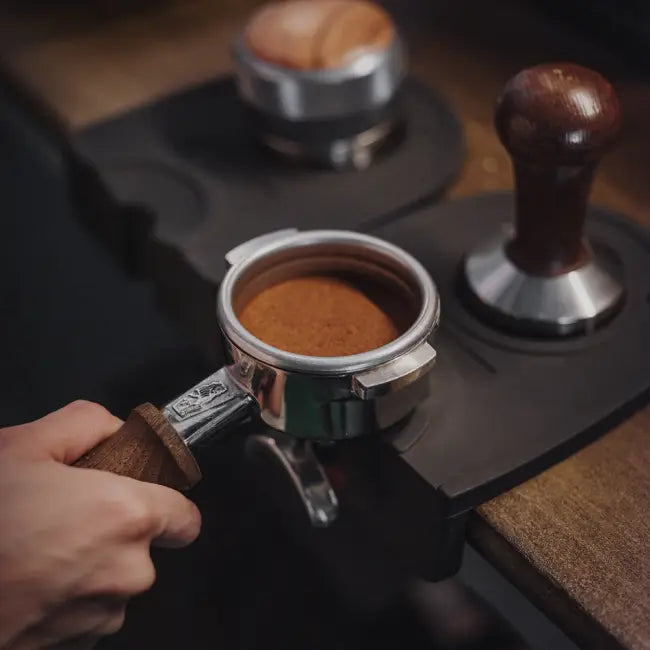
Espresso Tripui

Here is the most up-to-date recipe we have. It is important to remember that this recipe is for reference and that there are many variables that will influence the final result of the espresso in your cup: from the condition of your machine and grinder, the water you use, the storage/resting time of your coffee, to the temperature/ machine pressure, etc., and therefore, you may need to modify some parameters to find a tasty and balanced espresso with your specific variables.

For example, we use 6 bars of pressure on our machine here; if yours is set to 9 bars, we would recommend reducing the extraction time by about 5 to 10 seconds to compensate.

Recipe:

  • Ratio: 1:2
  • Dry dose: 19g
  • In cup: 41.8g
  • Time: 30s
  • Resting time: minimum 2 weeks
  • Temperature: 94ºC
  • Pressure: 6 bars
  • Pre-infusion: No
  • Water: GH 60(ppm as CaCO3) KH 30 (ppm as CaCO3)

Machinery and equipment used for this recipe:

  • Espresso machine: La Marzocco PB 2GR
  • Grinder: Mahlkonig GBS (85µm)
  • Basket: 22g VST (ridgeless)
  • Extras: Barista Hustle WDT, Push Tamper (flat, 100% level)

Tripui filter

The following recipe is a guide for preparing coffee at home. Results may vary depending on your equipment, settings, and all the variables that influence extraction.

With each coffee we roast, our team performs tests to find a recipe that highlights all the coffee's qualities. The one you'll see below includes all the necessary information to reproduce it. Still, we always recommend trying and experimenting to discover what you like best: use it as a guideline and adapt it to your liking.

Remember: the journey is what matters, not the destination.

Please note: Water is the most important factor in achieving a great cup of coffee. Depending on where you live, its composition can vary drastically. Therefore, we recommend using at least filtered water; another option is a mixture of Bezoya and Lanjarón. When adjusting the recipe, change only one variable at a time to identify how it influences the flavor.

It's common to start by adjusting the coffee-to-water ratio. Once you get a cup with a pleasant intensity and mouthfeel, you can modify other aspects of the extraction.

Most pour-over coffee recipes use a ratio between 1:15 and 1:17, with a brew time of 2:30 to 4:30 minutes.

Kalita / Origami / Orea

We have chosen this method to share our recipes because it is very versatile and easy to adapt to other pour-over systems. The flat bottom and wavy folds of Kalita filters create a wide surface that prevents significant flow blockages caused by the migration of fine particles or clogging.

Kalita/Origami/Orea

Recipe:

  • Ratio: 1:16
  • Coffee: 20g
  • Water: 315g
  • Total time: 3:20-3:50min
  • Temperature: 92ºC

Variables:

  • Resting time: Minimum 3 days after roasting, but expresses itself best after 8-20 days.
  • Water: 100% Bezoya
  • Filter: Kalita 185

Equipment:

Kalita/Origami/Orea, Kalita filter, Scale, timer, grinder, cup/decanter, and gooseneck kettle.

Method:

  1. Place the Orea on a cup/decanter and insert the filter. Pour hot water over it to eliminate paper taste and preheat the equipment.
  2. Grind the coffee to your recommended level.
  3. Discard the water, place the Orea on the scale, add the coffee distributing it evenly, tare the scale, and start the timer.
  4. Pour 60g of water in circular motions and wait 30-40 seconds for the coffee to bloom. If the coffee has been recently roasted, dedicate more time.
  5. Slowly pour water until approximately 200-250g, and swirl the Orea once to level the coffee bed and ensure it is fully saturated with water. Never fill to the brim; leave at least a 2 cm gap from the top to limit water bypassing the coffee bed, reducing extraction.
  6. Continue pouring water slowly as before until you have added the required amount of water.
  7. Swirl one last time and let the water drain.
  8. We are aiming for a total time according to the recipe. Adjust grind size next time if necessary.

Related products

FREE SHIPPING

Spain (Peninsula)

>40€ / Delivery 24/48h LV

Balearics

>40€ / Delivery 3/5 days, LV

Portugal

>40€ / Delivery 3/5 days, LV

Europe

>99€ / Delivery 4/7 days, LV

See more...